Care Guide
When Should I Water My Houseplants?
Signs Your Plant Needs Water
If you’ve ever searched online for how often to water a houseplant, you’ve probably seen answers like “once a week” or “every ten days.” While those recommendations may work in some situations, they can also be one of the biggest reasons new plant owners accidentally kill their plants.
The truth is that there is no universal watering schedule. Every home is different, every plant is different, and even the same plant may need completely different amounts of water depending on the season. A pothos growing in a bright kitchen window during the middle of summer might need water twice as often as another pothos sitting in a dim office across town.
Learning when your plant actually needs water is one of the most valuable skills you’ll develop as a plant owner. Once you understand what your plants are telling you, watering becomes much easier and your plants become healthier.
Why Watering Is So Important
Water does much more than simply keep a plant alive. It transports nutrients through the roots, allows cells to remain firm, supports photosynthesis, and helps regulate temperature throughout the plant. Without enough water, leaves begin to lose pressure, causing them to droop. If a plant stays dry for too long, growth slows, leaves may brown around the edges, and roots can eventually die.
However, too much water is often an even bigger problem.
Many people think overwatering means giving a plant too much water at one time. In reality, that’s usually not the issue. Plants actually appreciate a thorough watering. The real problem occurs when the soil never has an opportunity to dry enough for oxygen to reach the roots.
Healthy roots need oxygen just as much as they need moisture. When soil stays constantly wet, the tiny air pockets inside the potting mix fill with water instead of air. Over time, roots begin to suffocate and become vulnerable to fungi that cause root rot. Once root rot begins, it can spread surprisingly quickly.
This is why experienced plant growers often say they worry far more about watering too often than watering too much during a single watering session.
Forget the Calendar
One of the biggest mistakes beginners make is watering every Saturday or every Sunday simply because that’s “watering day.”
Plants don’t own calendars.
Instead, they respond to the conditions around them.
Imagine two identical Monstera plants purchased on the same day. One lives near a large south-facing window where it receives bright indirect light for most of the day. The other sits across the room in lower light. Even though they’re genetically identical, the brighter plant will use more water because it’s actively growing faster. If both plants are watered on exactly the same schedule, one may thrive while the other slowly develops root problems.
Now imagine winter arrives.
The days become shorter.
Your home’s heating system lowers humidity.
Plant growth slows dramatically.
The same watering schedule that worked perfectly during July may suddenly become far too frequent by January.
Instead of asking yourself, “Has it been seven days?” ask yourself, “Does my plant actually need water today?”
That simple change in thinking makes an enormous difference.
Learn to Read the Soil
Your soil tells you much more than your calendar ever will.
The simplest method is to stick your finger into the potting mix about one to two inches deep. The very top of the soil dries quickly, so checking only the surface can be misleading.
If the soil below the surface still feels cool and damp, your plant probably doesn’t need water yet.
If it feels dry at that depth, many common tropical houseplants are ready for another watering.
Some plants, such as peace lilies, ferns, and calatheas, generally prefer to stay slightly more moist. Others, including snake plants, ZZ plants, jade plants, and most cacti, prefer drying much more thoroughly before being watered again.
As you gain experience, you’ll begin recognizing how different species behave instead of treating every plant the same.
The Pot Weight Trick
If you ask experienced collectors with hundreds of houseplants how they know when to water, many won’t even touch the soil.
They simply pick up the pot.
A freshly watered plant feels surprisingly heavy because the soil contains a large amount of water.
As the plant uses that moisture and some evaporates, the container gradually becomes lighter.
After lifting the same plant a few times over several weeks, your brain starts recognizing exactly what “needs water” feels like.
This trick is especially useful if you own many plants because it allows you to move quickly through your collection without checking every pot individually.
Light Changes Everything
Light is one of the biggest factors influencing watering frequency.
Plants growing under bright light photosynthesize more quickly. Faster photosynthesis means faster growth, stronger roots, and greater water use.
Plants kept in darker conditions use less water because they’re growing more slowly.
Many beginners unknowingly overwater low-light plants because they assume all houseplants should receive water every week.
Instead, remember that lower light almost always means slower drying soil.
Pot Material Matters Too
Terracotta pots breathe.
Water slowly evaporates through the clay itself, allowing soil to dry more quickly.
Plastic pots retain moisture much longer.
Ceramic pots vary depending on whether they’re glazed.
If you’ve ever wondered why one of your plants dries twice as fast as another, the container may be part of the answer.
Pot Size Makes a Difference
Large pots hold significantly more moisture than small pots.
A tiny four-inch nursery pot may dry within several days.
A large twelve-inch decorative planter may stay moist for two weeks or longer.
Using an oversized pot for a small plant can actually increase the risk of root rot because there is simply too much wet soil surrounding a relatively small root system.
Choosing an appropriately sized pot helps the soil dry at a healthier rate.
Seasonal Changes
Plants behave very differently throughout the year.
During spring and summer, longer days and warmer temperatures encourage active growth. Many plants produce new leaves, larger root systems, and require more frequent watering.
During autumn and winter, growth naturally slows for many species.
This doesn’t mean your plants stop needing water entirely.
It simply means they usually need it less often.
Many experienced growers intentionally check plants more frequently during summer while expecting much longer gaps between waterings during winter.
Water Thoroughly
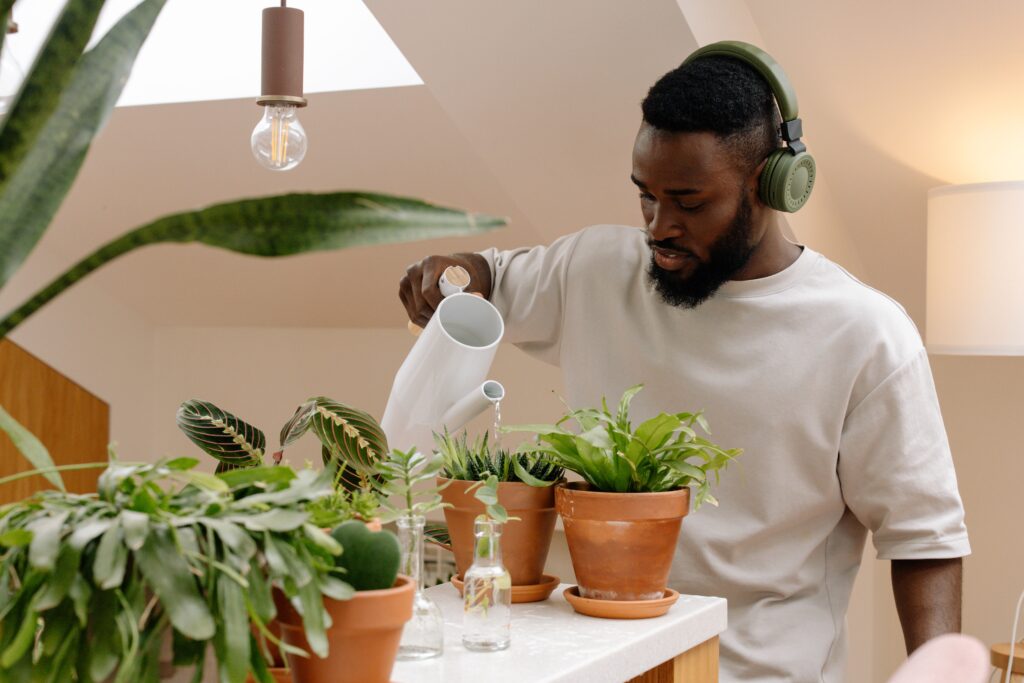
When your plant does need water, don’t be afraid to water generously.
Continue watering until excess water begins draining from the bottom of the pot.
This ensures moisture reaches the entire root ball instead of only the upper few inches of soil.
It also helps flush away fertilizer salts that naturally build up over time.
After watering, allow the pot to drain completely before returning it to its decorative cachepot or saucer.
Standing water trapped beneath a pot can keep the soil wet much longer than intended.
Common Signs of Underwatering
Plants communicate surprisingly well once you learn what to watch for.
Leaves may become limp or droopy.
Leaf edges may turn brown and crispy.
Growth often slows.
The soil may begin pulling away slightly from the edge of the pot.
The container usually feels much lighter than normal.
Many tropical plants recover quickly after a proper watering if caught early.
Common Signs of Overwatering
Overwatering often develops more slowly.
Older leaves may turn yellow.
New growth may appear weak.
The soil remains wet for many days.
You may notice fungus gnats flying around the pot.
Roots can become soft, dark, or mushy.
Sometimes the soil develops a sour smell.
Many of these symptoms resemble underwatering, which is why checking soil moisture before watering is so important.
Final Thoughts
If there’s one lesson to remember, it’s this: don’t water because the calendar tells you to. Water because your plant needs it.
Spend time observing your plants. Lift the pots. Feel the soil. Notice how quickly different species dry. Pay attention to the seasons and how your home’s environment changes throughout the year.
The more you practice, the less you’ll rely on rules and schedules. Eventually, watering becomes something you understand almost instinctively.
Healthy houseplants aren’t usually owned by people with perfect watering schedules. They’re owned by people who have learned to observe their plants, respond to their needs, and adjust as conditions change. That’s a skill anyone can develop, and it’s one of the biggest steps toward becoming a confident plant owner.